The 2027 State of Lead Magnet & Form Fraud: How Bot Signups Drain SMB Ad Budgets
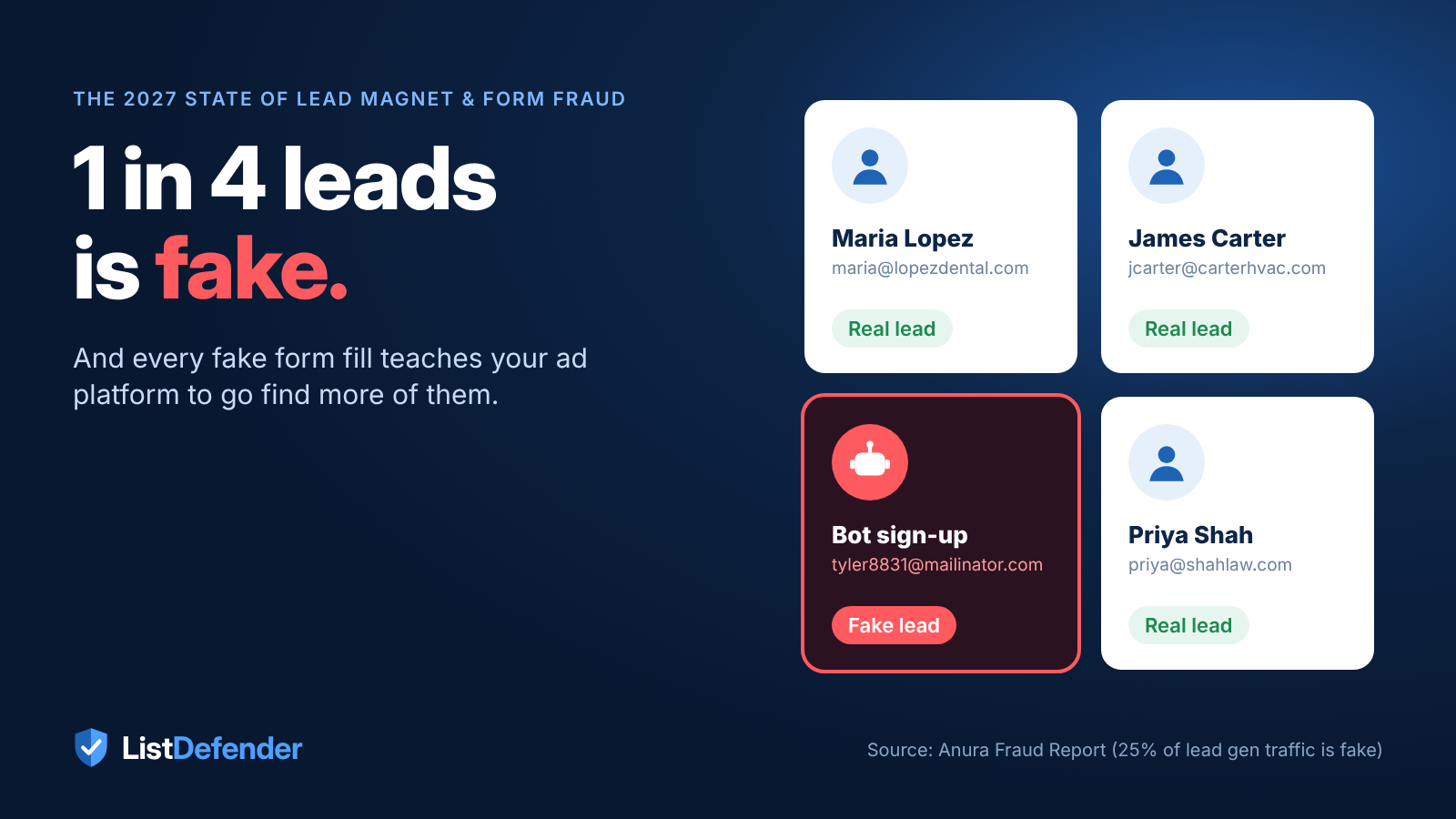
Lead magnet bot fraud is one of the most expensive problems small businesses never see. Bots grab your free guide, pollute your CRM, and teach your ad platforms to buy more fake traffic. ListDefender blocks these bots at the form, so your ad spend and your sender reputation go to real people.
Key Takeaways
- Ad fraud firm Anura reports that 25% of lead gen form fills are fake. That's one in every four leads draining your budget.
- Fake sign-ups do double damage: you pay for the lead, then your ad platform learns to find more traffic just like it.
- A single unprotected form can collect thousands of fraudulent entries before anyone notices.
- The fix is two parts: block bots at the form in real time, and keep your existing list clean automatically.
What Is Lead Magnet Bot Fraud?
Lead magnet bot fraud is when bots or scripts submit fake entries into the forms you use to give away a checklist, guide, webinar seat, or discount. Every fake submission lands in your database as a "lead" that will never buy.
Here's what makes it so hard to catch. The form fill looks legitimate. The email address passes basic validation. The name looks real. But no human ever touched that form. These bots are built to imitate human behavior across ads, landing pages, and forms.
And the numbers are big. According to ad fraud detection company Anura, 25% of all lead gen form fills are fake. Those fake visitors fill out forms with junk data, get counted as conversions, and quietly eat away at your ROI.
Why do bots target lead magnets?
Because it's easy. A free download only asks for a form submission. There's no payment step to stop a bot and usually no human verification. The bot "claims" the resource, and you pay for a lead that doesn't exist.
Why are small businesses more vulnerable?
Fake sign-ups increase every year, and small businesses are among the easiest targets. You rely heavily on online forms and automations, and you don't have a fraud prevention team watching every funnel like a large enterprise does.
That's how a single unprotected form can let in thousands of fake entries before anyone notices. Tools like ListDefender's ActiveCampaign form protection close that gap by stopping bots before they ever reach your automations.
How Do Bots Drain Your Ad Budget?
Bot traffic drains ad budgets in two ways. First, you pay for fake clicks and fake leads. Second, those fake conversions corrupt the data your ad platform uses to decide what to buy next.
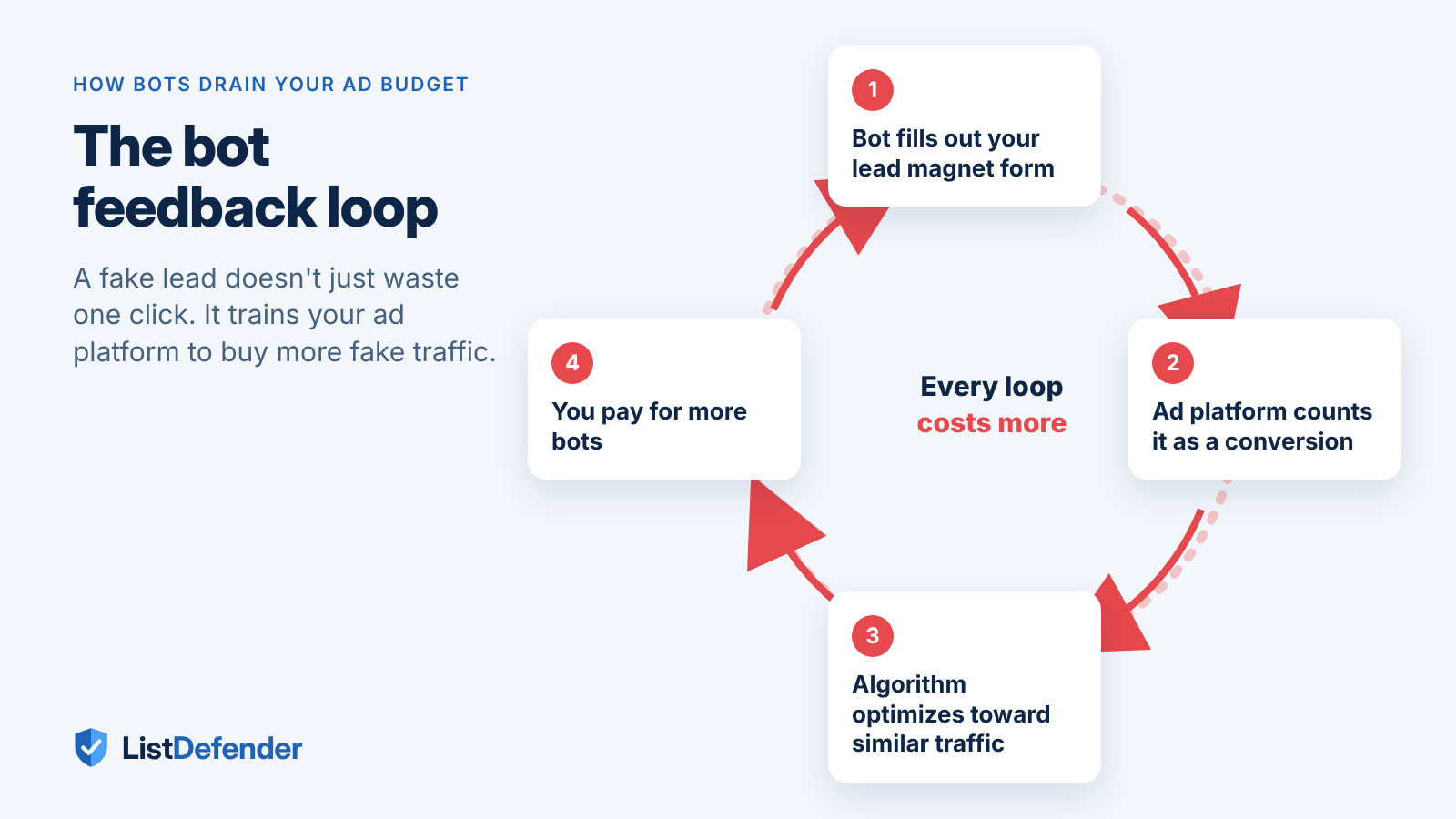
Why do fake leads cost more than fake clicks?
A fake click wastes money once. A fake lead keeps costing you. When a bot submits your form, Google or Meta records a successful conversion and starts optimizing toward similar traffic. Every fake conversion trains the platform to send you more bots.
That's why lead magnet bot fraud is so sneaky. Your campaign dashboard looks great: cost per lead is down, conversions are up. Meanwhile, revenue stays flat.
Why do bots fill out lead generation forms?
Not every fake submission comes from the same place. Some bots plant tracking cookies or manipulate retargeting pools. Some test stolen credit cards. Click farms complete offers for payouts, and fraud rings use real people's information without their consent. Whatever the motive, each fake entry pushes your campaigns further off course.
What Happens After Bots Get Into Your Email List?
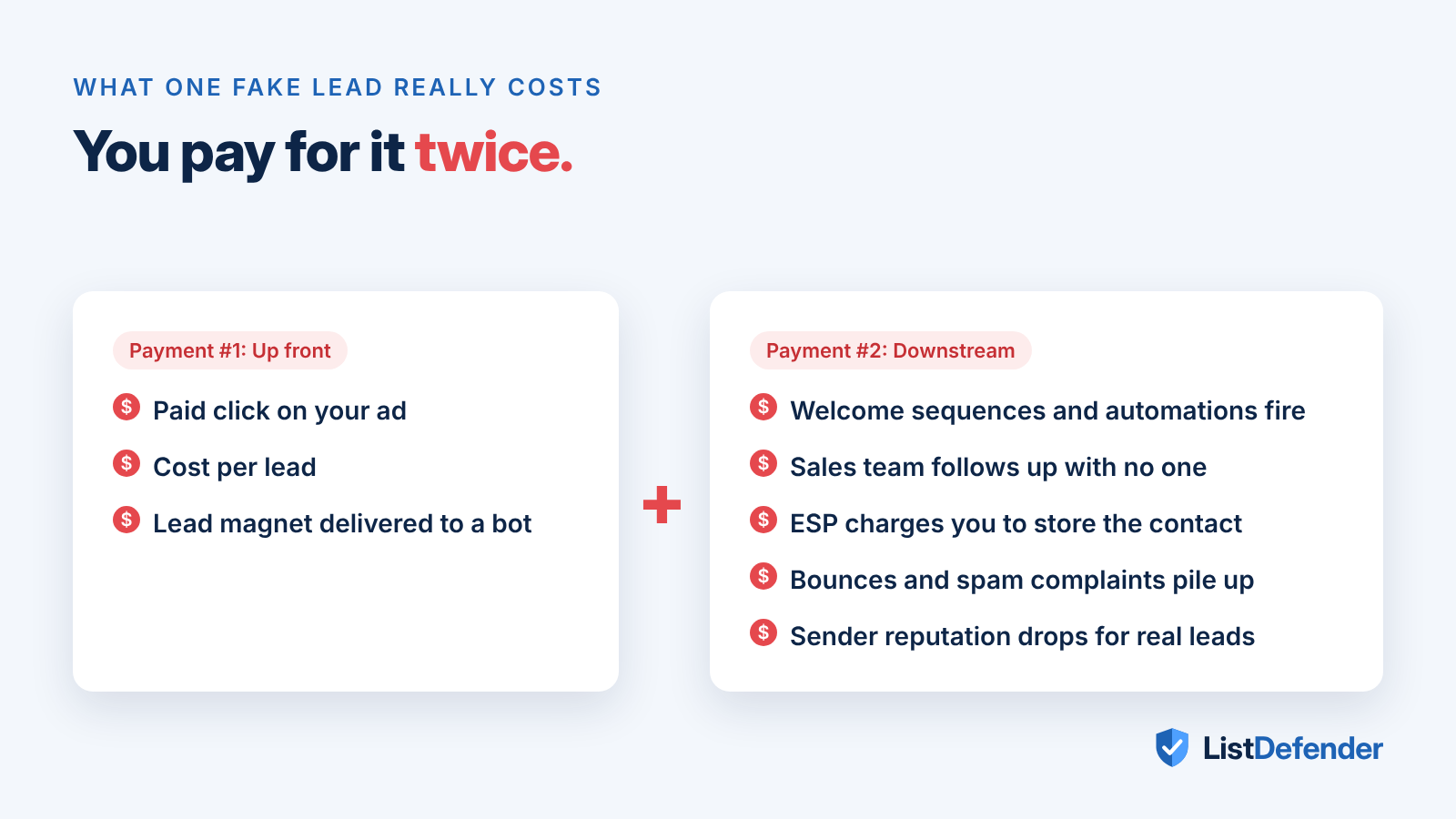
The damage doesn't stop at ad spend. Once a bot is in your list, it triggers automations built for real leads. Welcome sequences fire. Lead scores change. Your sales team gets notified about someone who doesn't exist.
Then the email damage starts. Fake addresses bounce, hit spam traps, or never open anything. Inbox providers notice. Your sender reputation drops, and your real prospects stop seeing your follow-up emails.
So every fake lead costs you twice: once when you pay for the click, and again in the downstream damage to your list.
How Can You Stop Form Fraud at the Source?
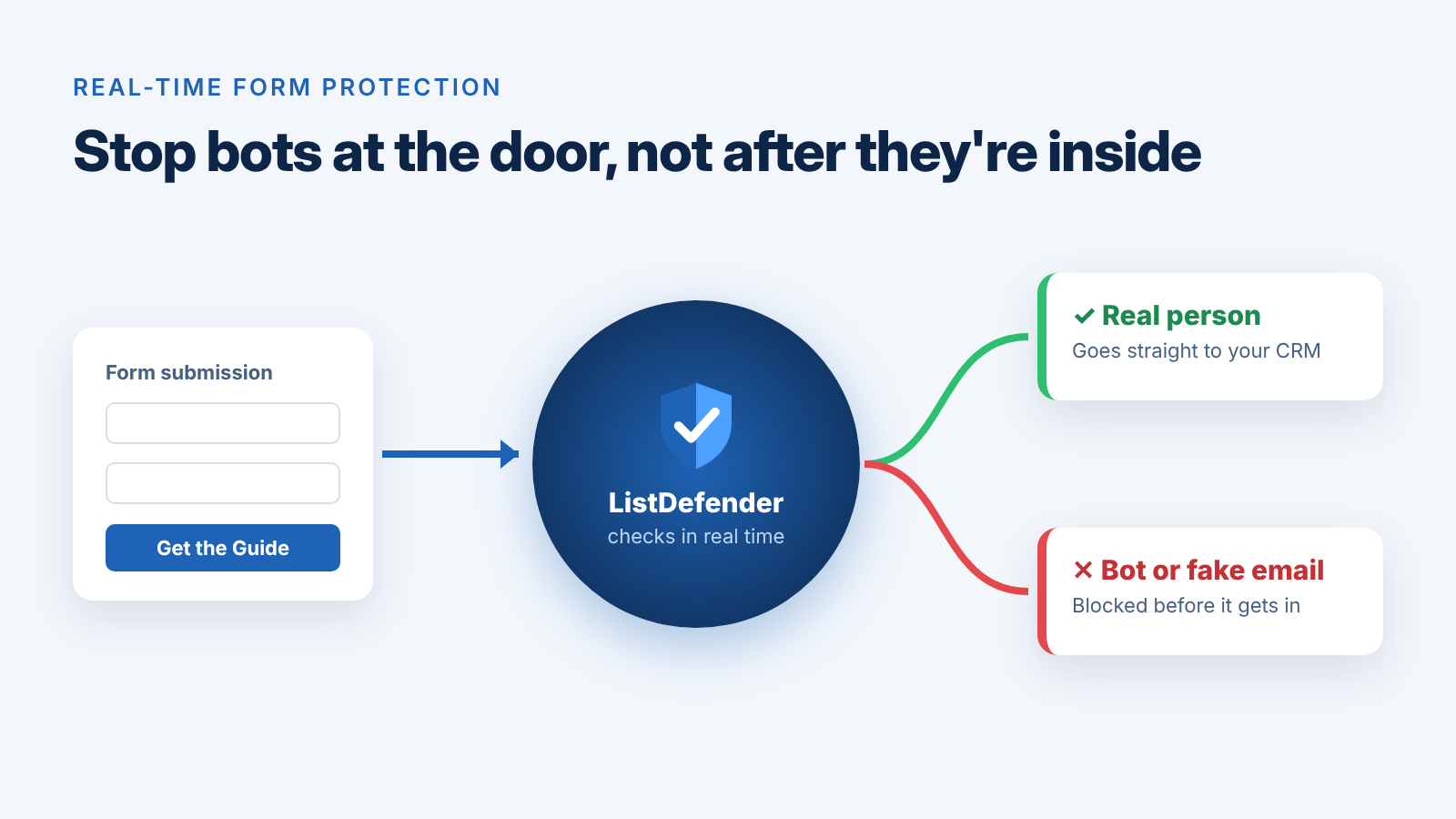
The best way to stop lead magnet bot fraud is to block bots before they submit a lead. Real-time form protection checks every submission at the point of entry, so fake sign-ups never reach your CRM.
How is real-time protection different from list cleaning?
List cleaning removes bad addresses after they're already in your system. By then, the bot has already triggered your automations and skewed your ad data. Real-time validation stops them at the door.
ListDefender's form protection flags invalid, disposable, and low-quality addresses during submission, with no manual exporting or importing. Real people get through. Bots don't.
Which integrations matter for small business marketers?
Protection only works if it fits the tools you already use. ListDefender integrates with ActiveCampaign, ClickFunnels, HighLevel, Keap, and Kit. It cleans your list, protects your forms, and manages engagement in one place, so you don't need a stack of separate tools.
For ClickFunnels users, protecting forms from fake sign-ups stops bots before they ever reach the CRM. That single layer prevents most of the downstream damage to your deliverability.
What Should You Do About Lead Magnet Bot Fraud?
Stop chasing bots one by one. Instead, build your audience from verified, real people. When your list only contains confirmed humans, the bot problem largely solves itself.
In practice, that means two things:
- Block fake submissions at the form. Real-time protection keeps bots out of your CRM and out of your ad platform's conversion data.
- Clean your existing list automatically. Continuous cleaning removes the bad contacts already in your database, without manual exports that leave gaps.
Verified audiences plus automatic form protection equals cleaner data and stronger inbox placement. Skip this step, and you keep paying for leads that never buy.
FAQ
What is lead magnet bot fraud?
It's when bots or scripts submit fake entries into your lead capture forms, filling your database with junk contacts that never become customers.
How do bots drain your ad budget?
You pay for fake clicks and fake leads, and those fake conversions train your ad platform to buy more bot-like traffic.
Why are small businesses more vulnerable to lead magnet bot fraud?
Small businesses rely heavily on forms and automations but rarely have a fraud prevention team, so one unprotected form can collect thousands of fake entries before anyone notices.
How do I stop bots from signing up for my lead magnet?
Use real-time form protection that checks each submission before it reaches your CRM, and pair it with automatic list cleaning for the contacts already in your database.
Conclusion
The decision is simple: stop paying for leads that will never buy. Block bots at the form and clean your existing list automatically. That two-part approach protects your ad spend, protects your sender reputation, and makes sure every campaign dollar reaches a real prospect.