ListDefender Report: 22% of Lead Magnet Opt-Ins Are Bots
Annual Benchmark Report finds more than one in five small business lead magnet sign-ups are bots, disposable emails, or spam traps, putting sender reputation at risk ahead of peak holiday email volume.
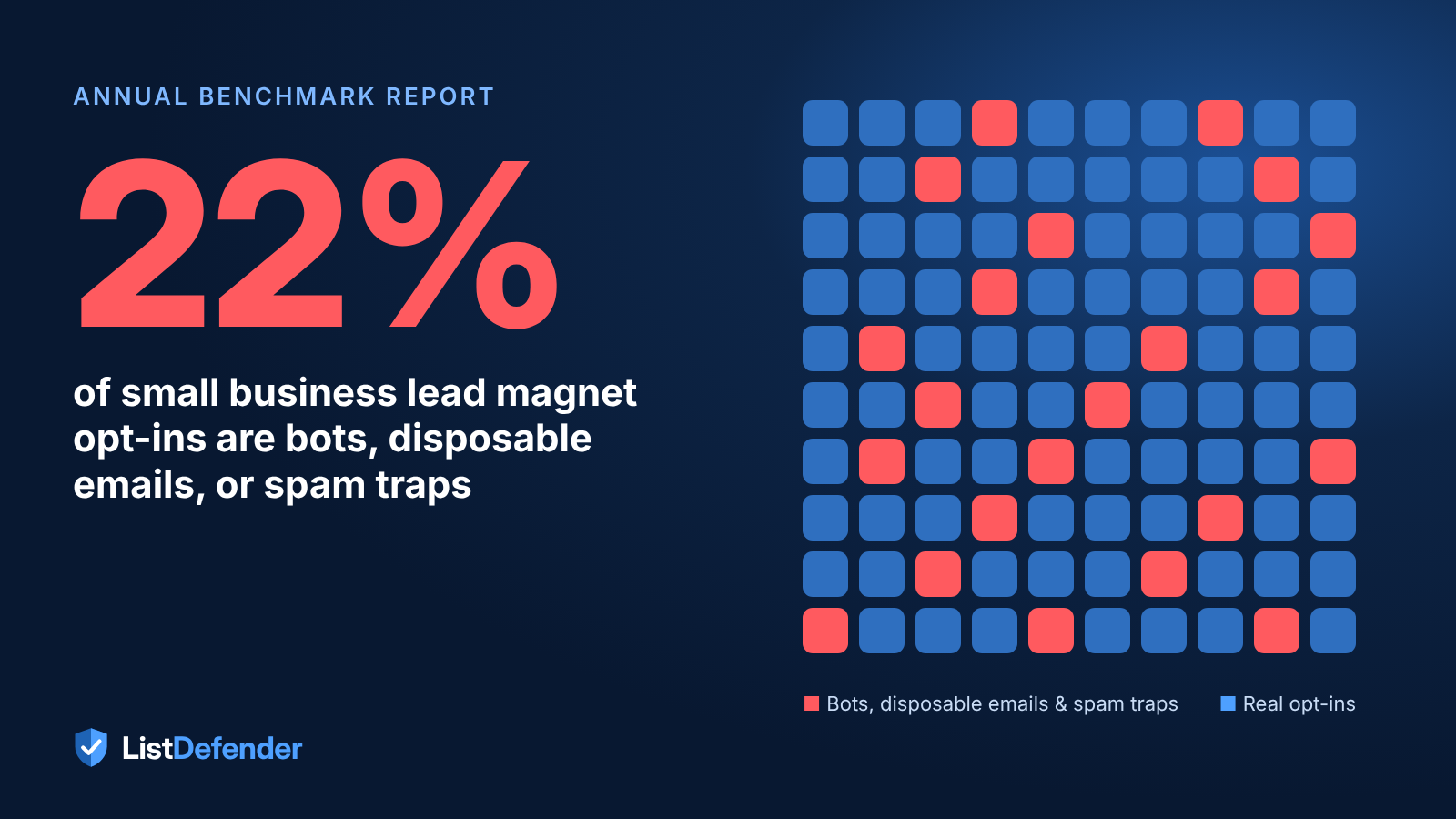
ListDefender today released its Annual Benchmark Report on Lead Magnet & Form Bot Fraud. The primary research shows that more than 22% of small business lead magnet opt-ins are bots, temporary or disposable email addresses, or spam traps. The company says that figure carries extra risk for marketers heading into the high-volume holiday email season.
The report draws on benchmark data from small business email campaigns and lead generation funnels to measure how much lead magnet bot fraud is reaching this market. The timing matters. Businesses send more email in the fourth quarter than at any other time of year, and a contaminated list can damage sender reputation quickly and push campaigns into spam folders at scale.
Real-Time Defense vs. Reactive List Scrubbing
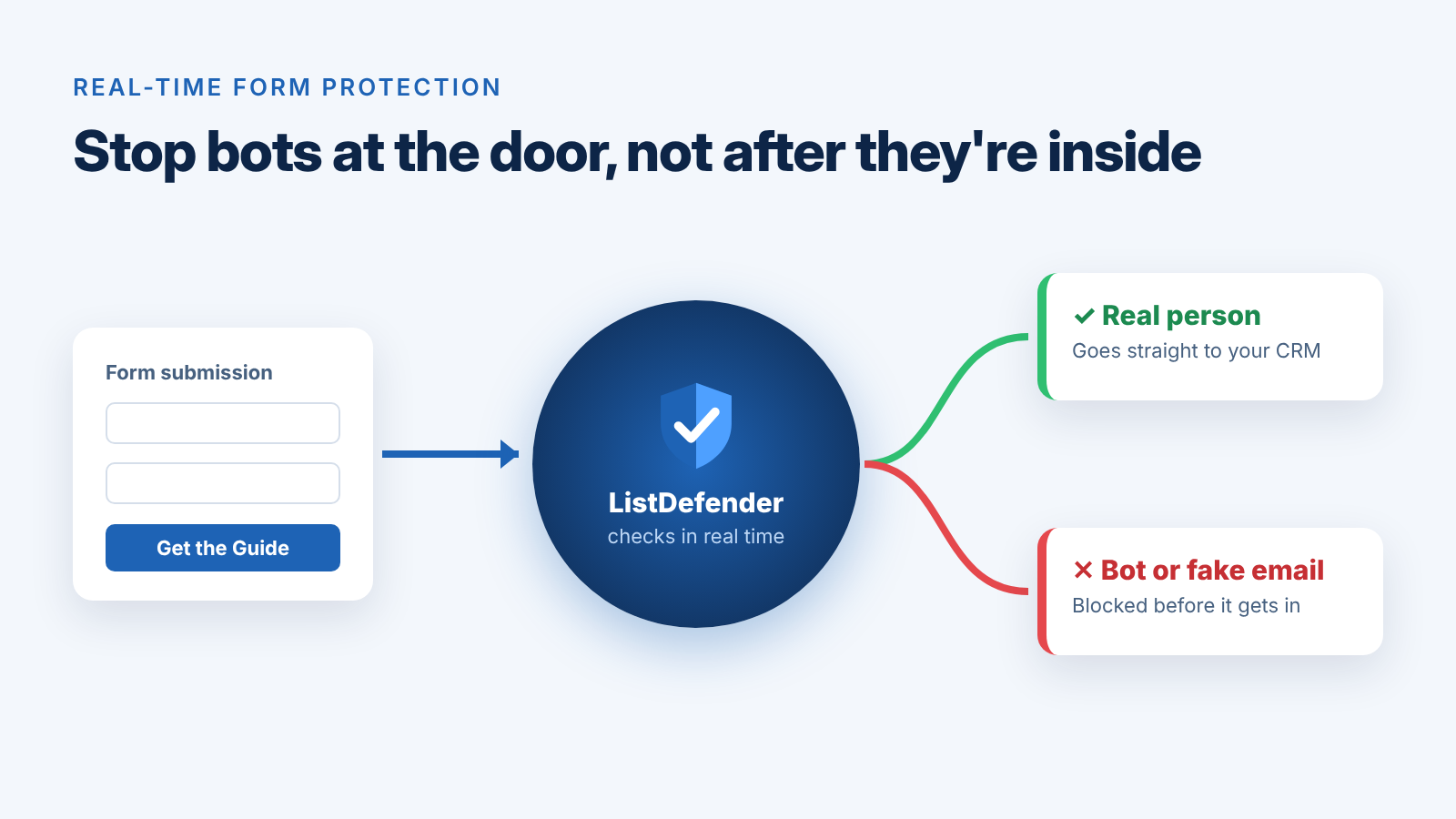
A central finding of the report compares two ways of protecting email list quality. Traditional batch list scrubbing cleans addresses after they're already in a database. By then, fraudulent and low-quality contacts have already used up ad spend, inflated subscriber counts, and started hurting deliverability.
ListDefender takes a different approach to form bot defense. It validates every contact at the point of entry, before the submission is accepted. Bot-generated addresses, disposable email domains, and known spam traps are filtered out at the opt-in form, so contaminated data never reaches a business's marketing automation platform.
"Every dollar spent driving traffic to a lead magnet is wasted when bots and fake emails pollute the list," said Dave Lee, co-founder of ListDefender. "Our benchmark data makes it clear that small businesses are absorbing big, silent losses. It's not just ad budget. It's sender reputation damage that builds over time and costs them inbox placement when it matters most."
Google and Yahoo Requirements Add Urgency
The report also addresses the sender requirements from Google and Yahoo, which require bulk senders to keep spam complaint rates below 0.10% or risk having their email filtered or rejected. When bot-generated addresses and spam traps get onto a list and receive marketing emails, they push complaint and bounce rates toward those limits.
The report positions email deliverability software that works at the form level as an ongoing safeguard rather than a periodic cleanup task. For small businesses that rely on email as a primary revenue channel, the difference is significant: crossing Google or Yahoo thresholds during the holidays can suppress delivery right when campaign ROI is highest.
Built for the Platforms Small Businesses Already Use
ListDefender's form protection works with the platforms small business marketers use most, including Keap, HighLevel, ActiveCampaign, ClickFunnels, and Kit. It filters submissions in real time without manual work or changes to existing campaigns.
The Annual Benchmark Report is available from ListDefender. It is designed to help small business owners, marketing managers, and agencies understand how much risk their current opt-in process carries. With the holiday email surge approaching, the company notes that businesses relying on existing lists without real-time form protection face a real risk of complaint rate increases that could affect their domain reputation well into next year.